 Stars Near St. George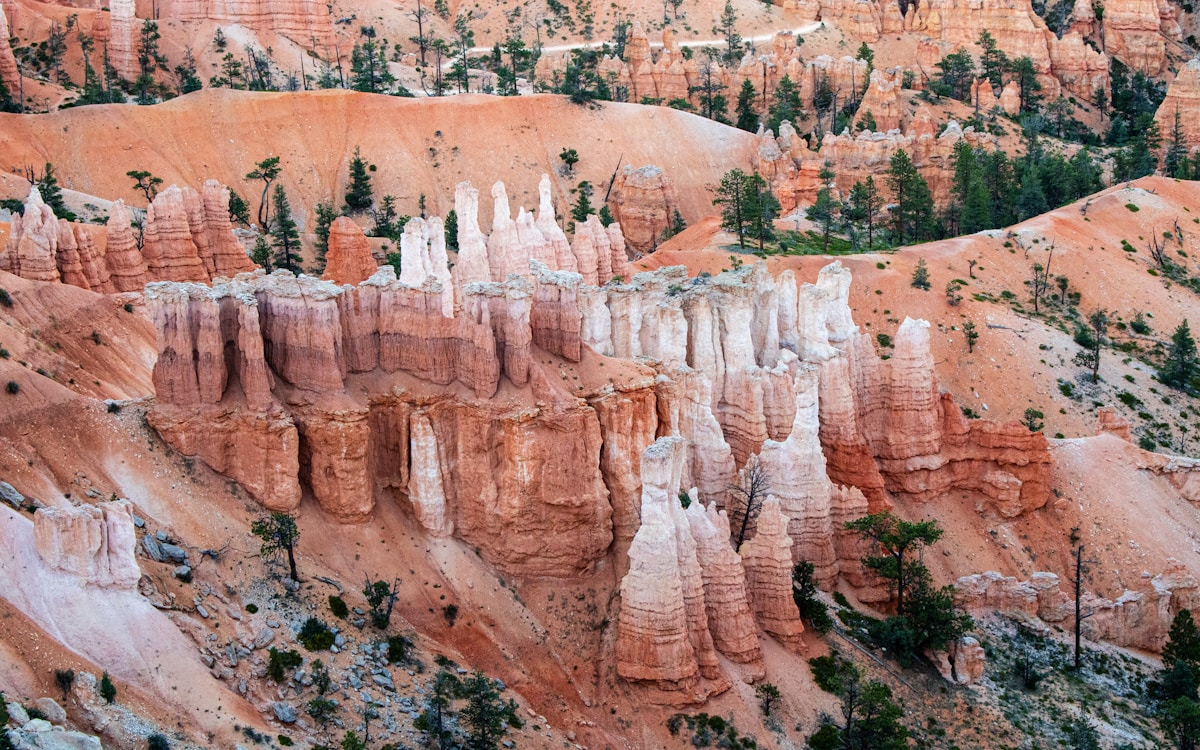
Let's start with the honest part: Zion National Park is spectacular, and its skies are genuinely dark — Zion is itself a certified International Dark Sky Park. If you stand in the right spot on a moonless night, you will see far more stars than you would at home. But geography is stubborn, and Zion's geography works against stargazers in a way that Bryce Canyon's works for them. If you have one night in southern Utah to spend looking up, spend it at Bryce. Here is why.
The problem with stargazing in Zion: the walls
Zion's main canyon is a slot in the earth. The very thing that makes it breathtaking by day — sandstone walls rising 2,000 feet or more on both sides — turns it into a keyhole at night. From the canyon floor, where nearly all visitors stay and walk, those walls block a huge portion of the sky. You see a brilliant ribbon of stars overhead and rock everywhere else.
That ribbon is lovely. But the most dramatic night sky objects often sit low: the Milky Way core rises in the southern sky, planets ride the ecliptic, and constellations climb from the horizon. In Zion Canyon, much of that show happens behind a wall. To get wider views you must drive up to the east side plateaus or the Kolob sections — and even then, you are working around terrain.
Did You Know?
Zion's canyon floor sits at about 4,000 feet — half the elevation of Bryce's rim.
The 4,000-foot elevation difference matters for more than sky visibility. At Bryce's 8,000 to 9,100 feet, you are above a meaningful chunk of the atmosphere's haze, water vapor, and dust. Stars appear sharper, and faint objects like distant galaxies are more visible. The combination of higher elevation and open horizon makes Bryce one of the best dark-sky observatories in the country.
Why Bryce Canyon is built for the night sky
Bryce is the geometric opposite of Zion. You do not stand at the bottom of Bryce looking up; you stand on top of it, on the rim of a vast amphitheater at 8,000 to 9,100 feet of elevation. Three things follow from that:
- Horizon-to-horizon sky. The rim viewpoints face open air. You can watch the Milky Way core rise in the south, track planets across the ecliptic, and catch meteors low on the horizon — nothing is hidden behind rock.
- Higher elevation, cleaner air. At 8,000+ feet you are above a meaningful chunk of the atmosphere's haze, dust, and water vapor. Stars are sharper, faint objects more visible. Zion Canyon's floor sits around 4,000 feet.
- Exceptional measured darkness. Bryce's skies have been measured at limiting magnitude 7.4 — among the darkest readings of any easily accessible place in the United States. On a clear, moonless night, roughly 7,500 stars are visible, and the Milky Way is bright enough to cast a faint shadow.
There is also a uniquely Bryce bonus: the hoodoos. Standing on the rim with thousands of stone spires silhouetted below you and the Milky Way arched above is a view that exists nowhere else on Earth. Our what to expect on a tour page describes how guided tours work that view into the evening.
| Factor | Zion | Bryce Canyon |
|---|---|---|
| Sky visibility | Narrow — canyon walls block much of the sky from the main canyon | Wide open — full horizon views from the amphitheater rim |
| Elevation at viewpoints | ~4,000 ft (canyon floor) | 8,000–9,100 ft (rim) |
| Dark sky status | International Dark Sky Park | International Dark Sky Park, magnitude 7.4 skies |
| Milky Way core view (May–Sep) | Often obstructed low in the south | Unobstructed from rim viewpoints |
| Signature night scene | Star ribbon between canyon walls | Milky Way over a hoodoo amphitheater |
| Best role in your trip | Day hiking and scenery | Evening and night sky destination |
"For stargazing, Bryce Canyon wins, and it is not close."
The verdict
For stargazing, Bryce Canyon wins, and it is not close. Zion is the better park for canyon hiking; Bryce is the better observatory. The good news is that this is not actually a choice — the parks are about 1.5 hours apart, and the smartest southern Utah itineraries use each park for what it does best: Zion by day, Bryce by night.
How to combine Zion and Bryce in one trip
If you are based in St. George or Springdale, here is the simple two-day version (the full three-day plan, including Kanab and Grand Staircase, is in our southern Utah night itinerary):
Day 1 — Zion by day
Ride the canyon shuttle, hike Riverside Walk or the Watchman Trail, and let Zion do what Zion does. Sleep in Springdale or St. George.
Day 2 — Drive east, stargaze at Bryce
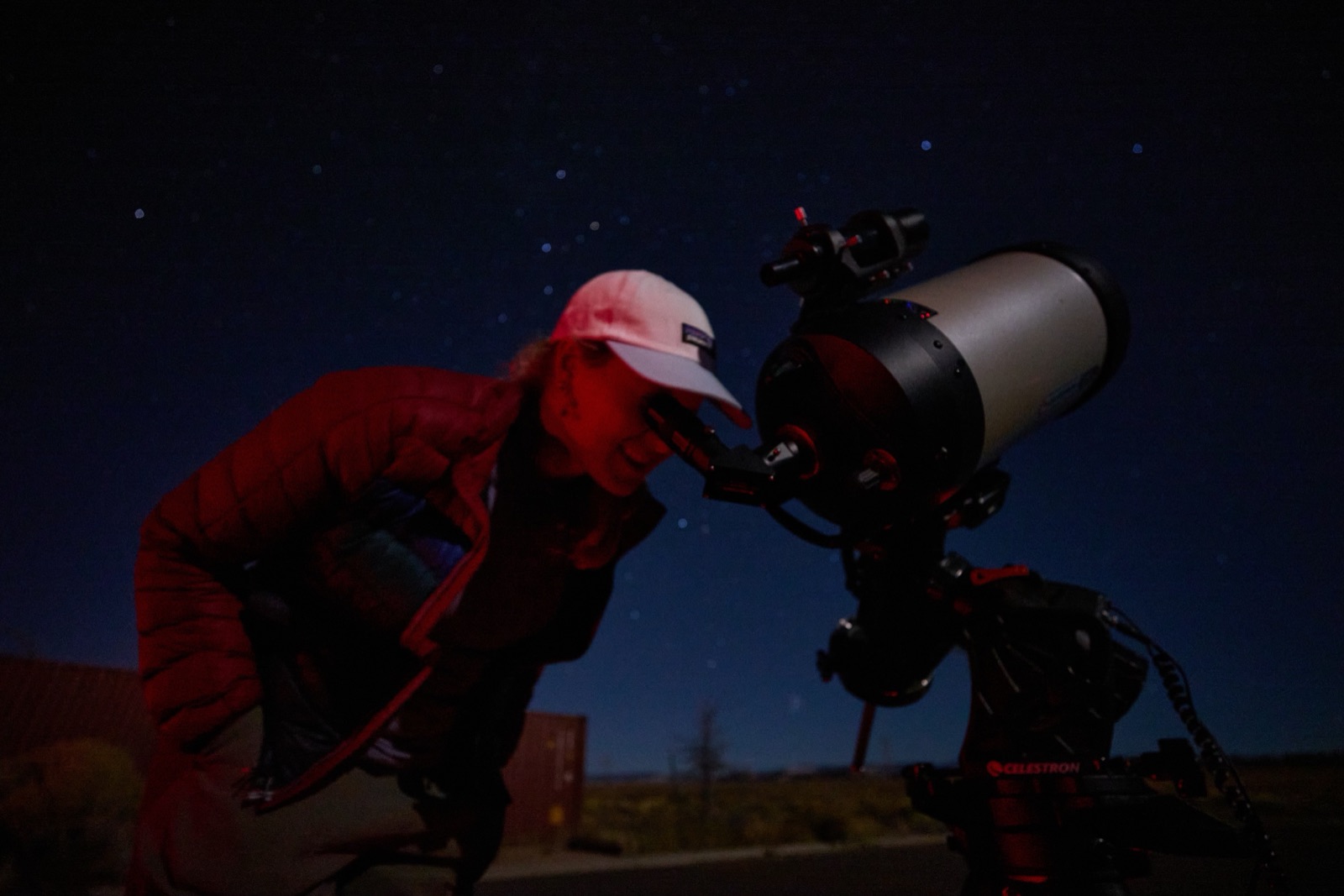
Take UT-9 through the Zion–Mount Carmel Tunnel in late morning — it is one of the great scenic drives anywhere — then US-89 north and UT-12 east to Bryce. Walk the rim between Sunset and Sunrise Points in the golden hour, eat dinner in Bryce Canyon City, then join a guided stargazing tour after dark. Telescopes, laser-guided constellation tours, and a guide who knows exactly where and when to look. Overnight near the park and catch sunrise over the hoodoos before heading home. Route details, mile by mile, are in the St. George to Bryce driving guide.
One planning note: check the moon before you pick your night. A bright moon flattens the Milky Way in either park. Our best time to stargaze guide explains how to schedule around it.
Spend your night where the sky is open
Guided telescope and constellation tours on the rim of Bryce Canyon — the night-sky half of the perfect Zion trip.
See What a Tour Is LikeWhat about stargazing in Zion anyway?
If your itinerary truly cannot reach Bryce, you can still have a good night in the Zion area: head for the east side along UT-9 near Checkerboard Mesa, or the Kolob Terrace Road viewpoints, where the terrain opens up. Bring red-light headlamps, arrive before full dark, and give your eyes 20–30 minutes to adapt. It will be a fine night. It just will not be a Bryce night — and once you have seen 7,500 stars over the hoodoos, you will understand the difference this page is describing.